Dagster and dlt
Dagster is built to integrate seamlessly with the best tools in the modern data ecosystem, using each tool where it makes the most sense within your pipeline. That’s why Dagster provides a native integration for dlt that combines the simplicity and flexibility of lightweight ETL frameworks with the robustness and orchestration capabilities of Dagster.
These lightweight services pair well with Dagster because they can leverage Dagster’s existing architecture. Many standalone ETL tools require setting up separate infrastructure, like databases and task queues, to handle state tracking and orchestration. With Dagster, those responsibilities are already built-in. Instead of duplicating that architecture, tools like dlt can integrate directly and let Dagster manage scheduling and focus on what it does best around orchestration and observability.
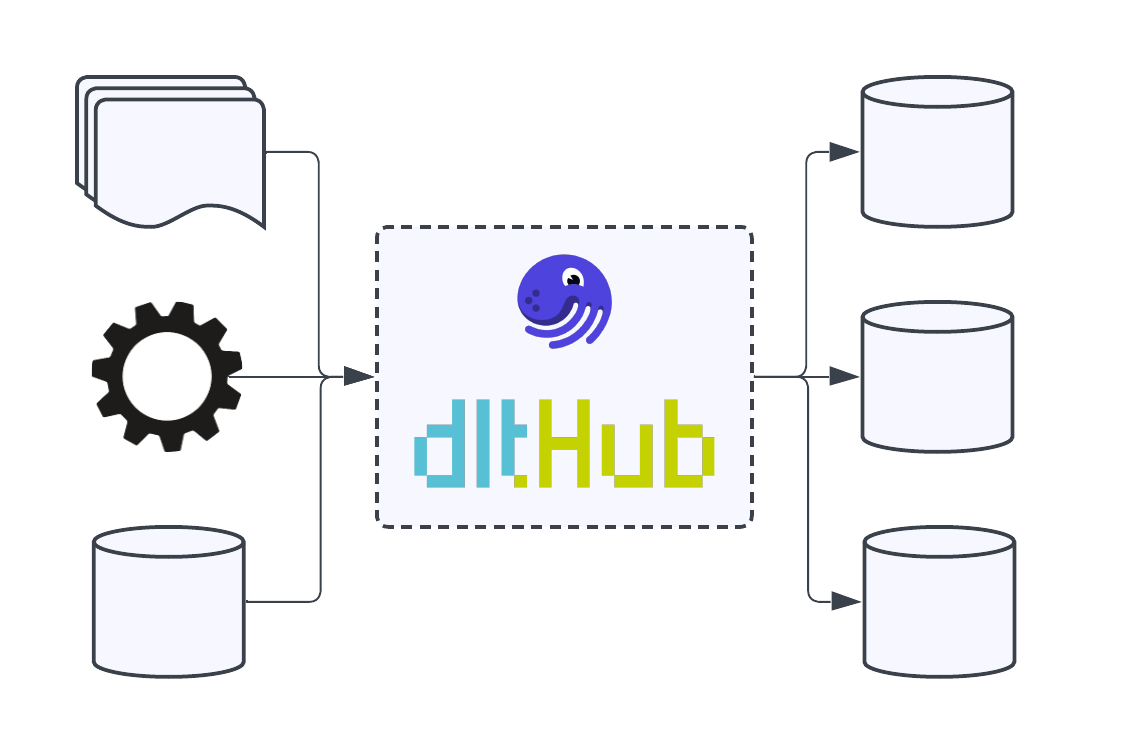
dlt assets
To see this in action, we’ll take the dlt quickstart pipeline we just created and convert it into a set of Dagster assets.
We’ll continue using the simple_source function decorated with @dlt.source. The only change is that we’ll now inject the data list directly within the function, so it behaves as a self-contained data source inside the pipeline:
@dlt.source
def simple_source():
    @dlt.resource
    def load_dict():
        data = [
            {"id": 1, "name": "Alice"},
            {"id": 2, "name": "Bob"},
        ]

        yield data

    return load_dict
Next, we’ll update our resources.py file to include the DagsterDltResource. This resource allows Dagster to execute dlt pipelines directly, bridging the gap between Dagster’s orchestration layer and dlt’s data loading capabilities. With this integration in place, we no longer need to define a separate DuckDBResource in Dagster, dlt will now be fully responsible for loading data into the database:
# src/dagster_and_etl/definitions.py
import dagster as dg
from dagster_dlt import DagsterDltResource


@dg.definitions
def resources():
    return dg.Definitions(
        resources={
            "dlt": DagsterDltResource(),
        },
    )
Back in assets.py, we can define our dlt assets. This will resemble the dlt.pipeline code we used earlier, but much of the logic will now be embedded in the @dlt_assets decorator. The function itself simply yields the result of running the dlt pipeline:
# src/dagster_and_etl/defs/assets.py
@dlt_assets(
    dlt_source=simple_source(),
    dlt_pipeline=dlt.pipeline(
        pipeline_name="simple_pipeline",
        dataset_name="simple",
        destination="duckdb",
        progress="log",
    ),
)
def dlt_assets(context: dg.AssetExecutionContext, dlt: DagsterDltResource):
    yield from dlt.run(context=context)
Just like that, the same dlt pipeline we previously built can now be executed and tracked by Dagster! This integration doesn’t just improve maintainability, it also cleans up our code and reduces boilerplate, making our ETL pipelines more modular and production-ready.
This works well for our simple example, but the real power comes next, we’ll refactor our earlier CSV and API pipelines to use dlt for extraction and loading, while continuing to orchestrate and monitor them through Dagster and represent each dlt resource as an asset.